

Every night in Peru, a single mother and her children would set a small table outside their home and leave a plate of food for a neighbour with a disability; a Filipino mother never gave up hope of finding her children; a group of high school students staged a “walkout” to defend their Aboriginal support workers; and, a young Lebanese boy – told by a teacher that his destiny lay behind bars – set out to prove the teacher wrong.
These are just some of the stories being gathered for Tides, a film project led by young people from Warrawong’s Bundaleer Housing Estate. The project explores the rich cultural connections that shape the place they call home, guided by the wisdom of their ancestors and the ebb and flow of the region’s history.
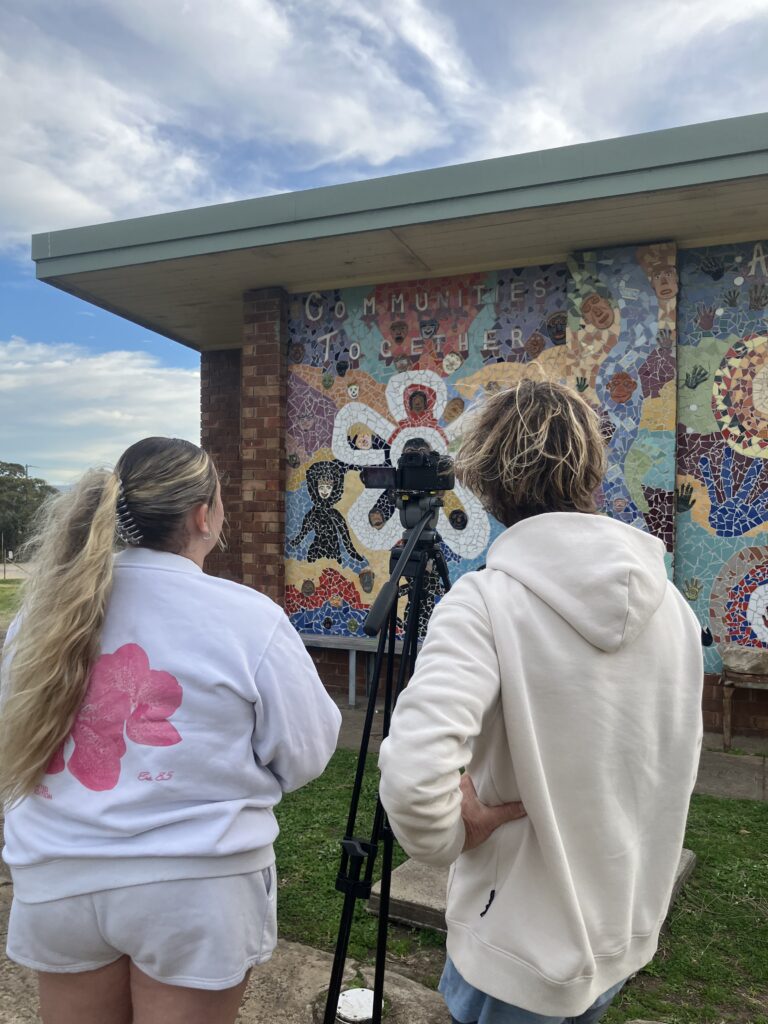
The young filmmakers are discovering these stories through their friends at school, their teammates, their neighbours and through new connections with people whose history they are only just beginning to learn, as together they try and answer the question: How did we get here?
The “Tides” project invites participants and audiences alike to “look, listen and see” the shared threads that bind their experiences, rather than the differences that set them apart. Located in the Illawarra region of New South Wales, Warrawong has long been a meeting point of cultures. Inspired by ancient teachings from Wodi Wodi and Yuin Country, the project draws symbolism from nearby Lake Illawarra, a tidal lake whose constant movement mirrors the continuous arrival and flow of new communities.
In the post-war decades, Warrawong and neighbouring suburbs such as Port Kembla and Cringila became home to large numbers of European migrants employed at the local steelworks, shaping the region’s multicultural identity. Later, waves of refugees from around the world also found a home here.
Warrawong has always been a place of new beginnings, with many shared experiences of displacement, struggle and resilience. In the post-war decades, Warrawong and neighbouring suburbs such as Port Kembla and Cringila became home to large numbers of European migrants employed at the local steelworks, shaping the region’s multicultural identity. Later, waves of refugees from around the world also found a home here. Today, Warrawong (Postcode 2502) is home to residents who speak 63 different languages.
Partner projects
Key project partners of the Tides film project are:
- Barnardos Australia
- Gawura Aboriginal Corporation
- Coequal, and
- Warrawong High School.
Find out more.
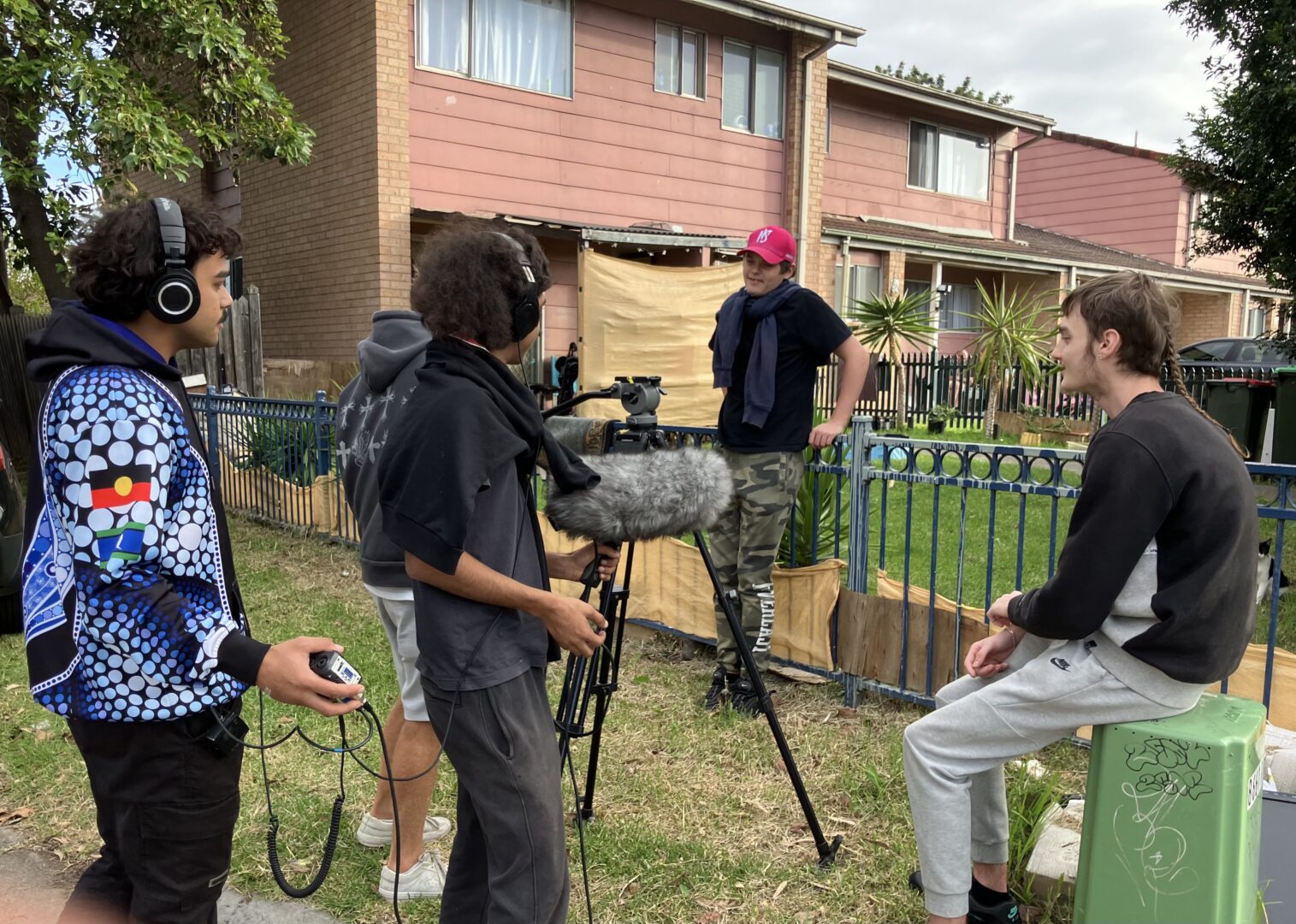
From the left: Koorin Parsons-Campbell, Phil Crawford, Maurice Thomas, Cooper Mangarelli and Bryce Condon on set filming the Tides Trailer.
The Tides project and its films are grounded in First Nations storytelling and cultural perspectives. As Elders remind us, “Country is the greatest teacher of all,” and Tides aims to show how deeply that lesson resonates when people take the time to truly “look, listen and see.” The project reveals how connection to Country can bridge cultures and generations — right down to the unexpected symbolism of a simple pelican, whose story offers insight into the beginnings of migration to Australia and the shared experiences that continue to bring the people of Warrawong together. Intrigued? Come and follow us on our journey.
Stephen Mitchell works for Gawura Aboriginal Corporation and part of the Tides team. Tides is funded by Multicultural NSW under the COMPACT program. COMPACT works across communities and sectors to inspire and empower young people to foster social cohesion, stand united against divisive forces and come together in times of need.
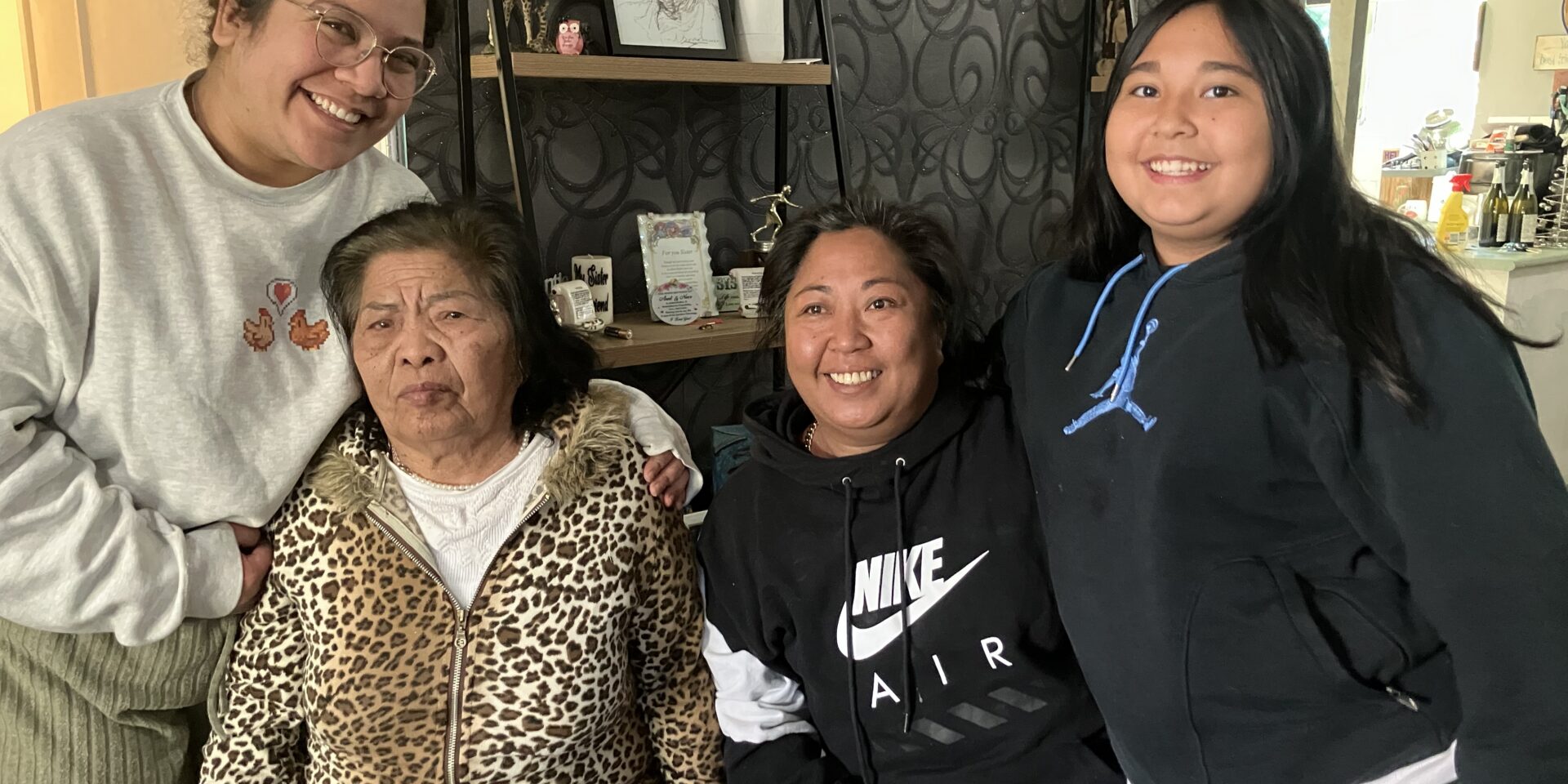
Main image caption: Shaniece Igano, Cely Woudsma, Roselyn Igano, Azelya Igano-As just after filming their family’s story for the Tides Project.
Other articles you might like...
View all
Discover I Talk, It Echoes — poetry by Blacktown’s youth capturing the heart of Western Sydney. Honest, vibrant, and deeply local, these voices share what it means to grow up here.
Thursday 22 January 2026 has been declared a National Day of Mourning to honour the 15 victims of the antisemitic terrorist attack at Bondi Beach. The day will be marked by a theme of light...

The internet was built to connect us — a digital space where distance was no barrier to connection. But somewhere along the way, the very platform designed to unite us began driving us apart.
In a classroom in Castle Hill, Christian and Muslim high school students from across Western Sydney are getting to know each other. The conversations going on in the room are stimulating, energetic, honest, loud. There’s...
