


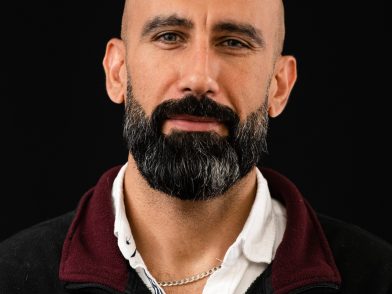
Abbas Raza Alvi was an established poet and singer in India. An Indian Muslim who migrated from India to Sydney in 1989, Abbas is saddened by the deepening communal and religious divisions he sees occurring in his country of birth today. He is concerned to ensure these tensions are not carried across into the Indian community in Australia.
“Growing up, India was a secular society,” Abbas told The New Point Magazine. “We are now seeing divisions between the Hindu and Sikh communities, especially on social media. We need to develop projects to dilute these effects.”
Abbas, who has a professional background in engineering, draws on his creative side to bring communities together around their shared love of poetry and music.
“Events overseas affect innocent people’s minds,” Abbas said.
“How can poetry and creativity offer a bridge? Creativity and poetry work on people’s emotions. A poet of a Muslim background wants to reach a Muslim, a Hindu or a Sikh. That’s the strength of creativity.”
Abbas was involved in founding two community orgsanisations based in Western Sydney. The Indian Crescent Society of Australia (ICSOA) represents Indian Muslims in Australia while also servicing Indian Australians from all cultural and faith backgrounds. The other organisation Abbas suports, We Australians Are Creative Incorporated (WAACI), promotes artistic expression among Indian Australians.
“We don’t want to bring the troubles that are happening in India to this part of the world. We came here for the betterment of our lives and that of our families, not to bring the nastiness of our home countries here.”
“I work with Indian Muslims in Australia, and there are 122,000 of these, including children,” Abbas said.
“The Indian Crescent Society looks after Indian Muslim interests and though it isn’t religious it does promote cohesion, peace and harmony.”
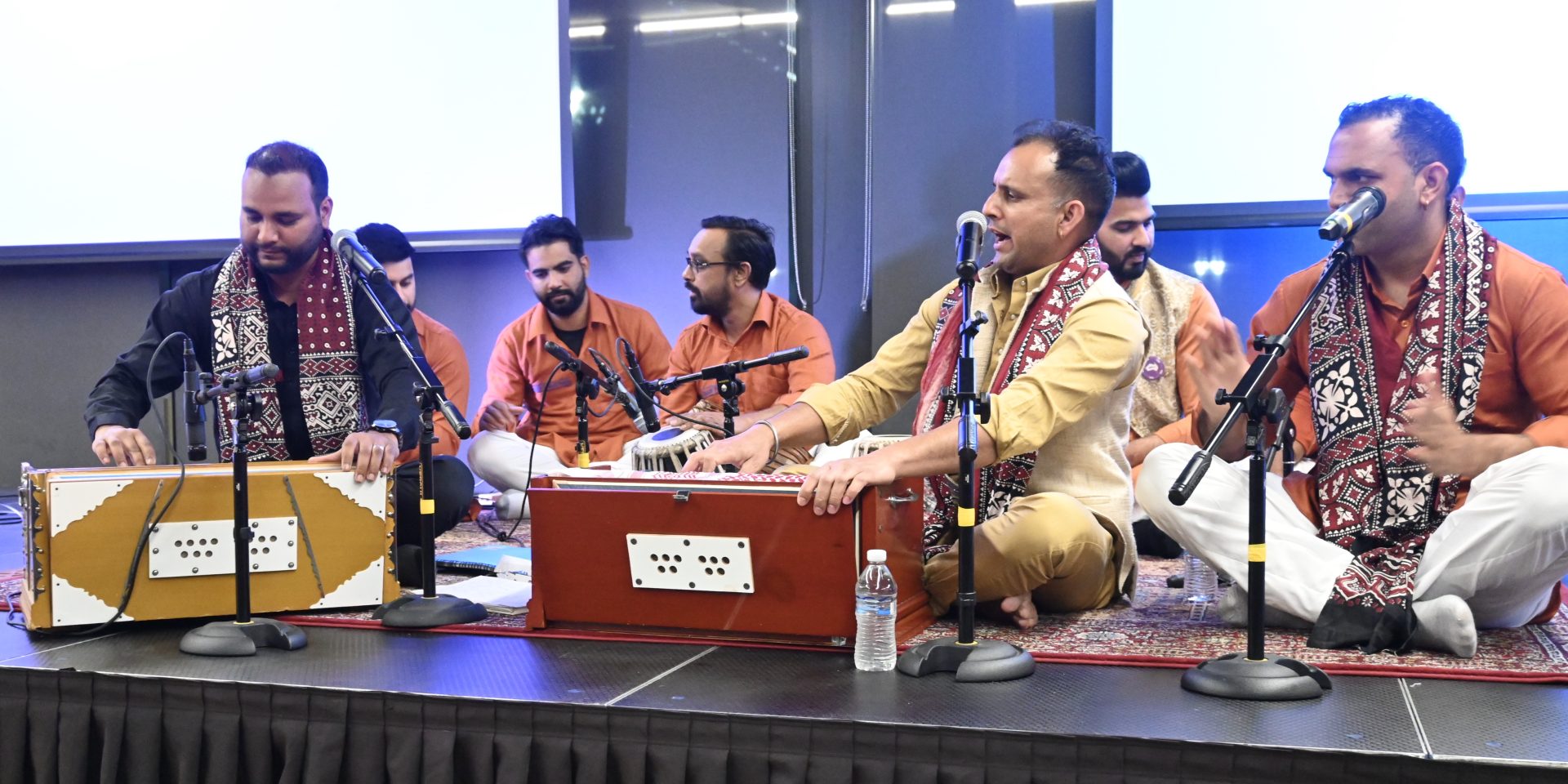
Through WAACI, Abbas, has been coordinating spiritual concerts that bring together Indian Australian community members of the Sikh, Hindu and Muslim faiths.
“The organisation believes that creativity has no boundaries and knows no religion and no codes. WAACI believes that creativity is a gift to mankind.”
One of WAACI’s key events was ‘Rahat,’ a performance event with an accompanying CD that launched at NSW Parliament House. 65 artists participated in the project including members of the Indian, Pakistani and Malaysian Australian communities.
In 2023, WAACI hosted an event called ’Power of Chants: An Event of Art, Poetry, and Music.’ The performance event was dedicated to ’the continuity of Social Cohesion, Peace & Harmony‘ offered opera, qawwali (traditional Pakistani chanting music) and poetry.
The concert’s theme was ‘Be like the flower that gives its fragrance even to the hand that crushes it,’ a saying attributed to Imam Ali, cousin and son-in-law of the Prophet Muhammad pbh. For Abbas, the saying calls on us to bear injustice with patience and compassion. The concert combined Sufi Muslim musical traditions with the Hindu devotional tradition of Bhakti.
Bhakti is a Sanskrit word for attachment, participation, fondness, homage, faith, love, devotion, worship and purity.
Abbas is keen to see more inter-religious solidarity in the Indian Australian community.
“The Muslim community celebrates Eid, Ramadan, and so forth. Hindus celebrate Diwali and other festivals. I don’t see many Muslim faces at Diwali festivals and many Hindu faces at Eid festival. 10 or 15 years ago there was a sense of togetherness.”
It’s this spirit of harmony that has deeply informed Abbas’ own work and which he now seeks to share with others.
“Our projects don’t just offer entertainment: we offer projects that remind people that there’s something better about living together,” Abbas said.
“We don’t want to bring the troubles that are happening in India to this part of the world. We came here for the betterment of our lives and that of our families, not to bring the nastiness of our home countries here.”
Explore other topics —
Other articles you might like...
View all
Distant relatives we couldn’t recognise told Fatema it was “your time”. The woman who cut Fatema was my aunt’s friend. The cutting took place in the middle of a noisy bush with the sounds of...
Can cultural traditions keep pace with modern life? In multicultural Sydney, Greek and Polish youth navigate a journey of belonging, blending heritage with contemporary life. This video explores how they bridge the past and present...
“This culture of togetherness is how Western Sydney has been able to foster world-class musicians. Music is not a commodity - but a community.” The New Point Magazine drills into the Western Sydney music scene.
We Persians have an expression that says: ‘That person has a worm.’ This is something akin to English phrases involving ‘bug’. I am sick. I have the bug of writing.
